The Role of Artificial Intelligence in Revolutionizing Music Creation
Introduction to AI in Music
Artificial Intelligence (AI) has emerged as a transformative force across various industries, and the music sector is no exception. AI, in its essence, refers to the simulation of human intelligence processes by machines, particularly computer systems. These processes include learning, reasoning, and self-correction, enabling computers to execute tasks that typically require human intellect.
The historical development of AI can be traced back to the mid-20th century when pioneers such as Alan Turing began exploring the concept of machine intelligence. Over the decades, advancements in algorithms, computational power, and data availability have significantly propelled the field forward. Today, AI encompasses a broad range of technologies, including machine learning, natural language processing, and neural networks. These innovations have made their way into the music industry, offering novel approaches to music creation, performance, and distribution.
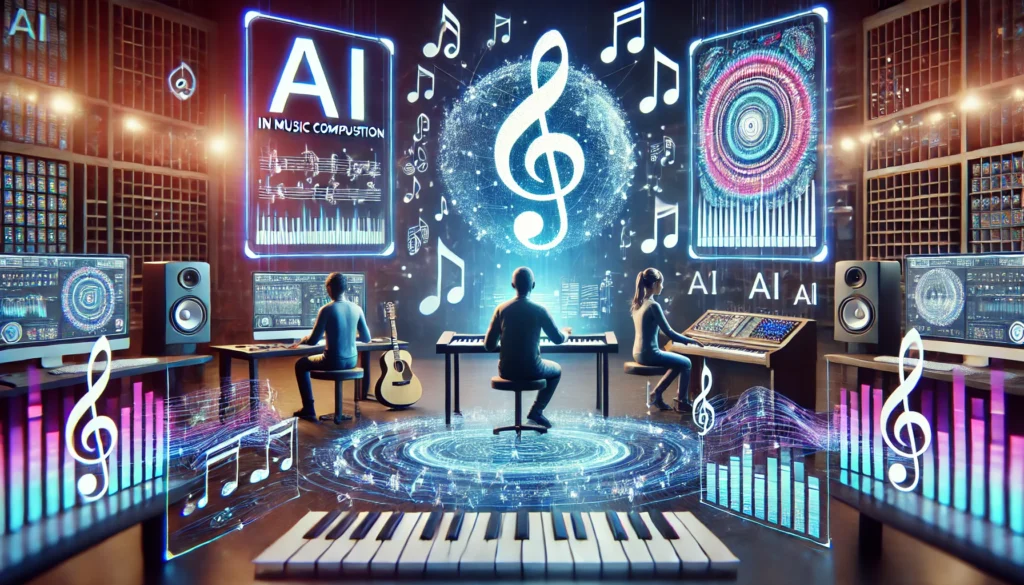
In recent years, the integration of AI into music creation has gained momentum, leading to a redefinition of traditional practices. Composers and artists are increasingly leveraging AI-powered tools to generate melodies, harmonies, and even entire compositions. These tools analyze vast datasets containing music from various genres, allowing them to identify patterns and create music that resonates with listeners. As such, AI has the potential to augment human creativity rather than replace it, serving as a collaborative partner in the creative process.
Moreover, AI plays a crucial role in enhancing music performance and distribution, streamlining various elements of the production pipeline. From personalized recommendation systems that curate playlists for listeners to automated mastering services that fine-tune audio tracks, AI is revolutionizing how music is accessed and consumed. This infusion of technology into the music industry heralds a new era, characterized by innovation and creative possibilities, underpinning the importance of understanding AI’s role in shaping the future of music.
AI Tools for Music Composition
The advent of artificial intelligence has significantly transformed the landscape of music composition, offering a plethora of tools that assist musicians in crafting melodies, harmonies, and entire songs. These tools harness advanced algorithms and machine learning techniques to facilitate creative processes, allowing artists to explore new dimensions in their work.
One of the pioneering AI tools in this realm is OpenAI’s MuseNet, which can generate musical compositions across various genres and styles. Users can input specific parameters such as genre, instrumentation, and even a starting melody, enabling the software to produce unique pieces that reflect the designated characteristics. This not only streamlines the songwriting process but also provides inspiration where traditional methods may fall short.
Another noteworthy AI platform is Amper Music, which empowers users to create custom music tracks effortlessly. With a user-friendly interface, artists can select the mood, style, and length of their compositions, after which Amper’s AI composes an original piece in real-time. This tool is particularly advantageous for content creators and filmmakers seeking royalty-free music tailored to their specific needs.
In addition to these platforms, AIVA (Artificial Intelligence Virtual Artist) stands out for its capability to compose music that emulates human creativity. AIVA analyzes a vast database of existing compositions to understand structure, harmony, and rhythm, enabling it to produce music that resonates well with listeners. This makes AIVA an essential tool for composers and musicians looking to expand their creative horizons.
Overall, the integration of AI tools in music composition not only enhances creativity but also democratizes the process, allowing individuals with varying levels of musical expertise to participate in music creation. By leveraging these innovative solutions, artists can overcome challenges often encountered in traditional composition methods, paving the way for a new era of musical exploration.
AI in Music Production
Artificial Intelligence (AI) is increasingly becoming an essential tool in the music production industry, revolutionizing traditional practices and enabling innovative processes. One prominent area where AI has made its mark is in automated mixing and mastering. These AI-enabled solutions leverage algorithms to analyze tracks, adjusting levels, and effects to achieve professional quality sound. This development allows producers and musicians to save considerable time and resources, making high-quality music more accessible than ever before.
Moreover, the integration of AI in sound engineering has led to significant enhancements in the way music is created. AI tools can analyze and categorize vast amounts of sonic data, identifying patterns that contribute to various genres. This allows musicians to harness new sound palettes and generate unique compositions that might not have been possible using traditional methods. By streamlining the creative process, artists can focus more on the artistic elements of their work rather than the technicalities of sound production.
Additionally, AI plays a crucial role in optimizing music tracks for both streaming services and radio play. By tailoring music to suit algorithm-driven platforms, AI helps artists understand what elements in their songs appeal most to listeners. This data-driven approach provides insights into song structure, tempo, and even lyrical content that resonates well with a target audience. As a result, musicians can enhance the potential for their tracks to gain traction in an increasingly competitive landscape.
In essence, the incorporation of AI in music production fosters a dynamic interplay between technology and creativity, allowing artists to push boundaries while simplifying the intricacies of sound production. As these tools continue to evolve, they promise to further reshape the music industry, giving rise to a new era of music creation that combines human ingenuity with the analytical strength of artificial intelligence.
The Impact of AI on Music Genres
Artificial Intelligence (AI) is transforming how music is created across various genres, influencing the evolution of pop, hip-hop, and electronic music in remarkable ways. In pop music, AI technology has already made significant strides. For instance, platforms like OpenAI’s MuseNet can generate original compositions that emulate popular music styles. Artists such as Taryn Southern have collaborated with AI to produce entire albums, where AI-generated melodies set the foundation for creative lyricism and vocal performance. This synergy between human creativity and machine learning illustrates the potential of AI to enhance artistic expression.
Hip-hop, a genre known for its innovation and boundary-pushing, has also seen the incorporation of AI-based tools. Notably, some producers utilize AI algorithms to analyze vast catalogs of previous hip-hop tracks, identifying patterns and trends that inform their new works. For example, in 2020, the rapper Travis Scott partnered with an AI company to produce unique beats tailored to his style, helping him maintain the genre’s ever-evolving nature while incorporating cutting-edge technology. Such collaborations not only highlight the adaptive nature of hip-hop but also suggest a future where AI-generated elements become increasingly commonplace in music production.
In the realm of electronic music, AI tools are central to the genre’s aesthetic. Artists like Aiva and Holly Herndon use AI for composing complex arrangements and synthesizing sounds that push the envelope of traditional composition techniques. Herndon’s album “PROTO” showcases an AI-driven virtual singer, demonstrating how electronic music can intersect with digital innovation. By integrating AI into their workflows, electronic musicians can explore new sonic landscapes, ultimately redefining the genre’s possibilities. Overall, AI’s extensive influence across these genres underscores a paradigm shift in music creation, paving the way for unprecedented artistic exploration and collaboration.
Collaborations Between Artists and AI
The collaboration between artists and artificial intelligence (AI) has emerged as a transformative phenomenon in the music industry. Musicians now increasingly embrace technology to augment their creative processes, leading to innovative compositions that blend human imagination with algorithmic efficiency. Notable examples of such collaborations have garnered significant attention, prompting discussions about the future roles of artists and AI systems in music creation.
One prominent example is the collaboration between the electronic musician Holly Herndon and her AI system, Spawn. Herndon integrated Spawn into her creative workflow, allowing the AI to analyze her voice, generate sounds, and contribute to the overall composition. This partnership exemplifies the potential for AI to serve not merely as a tool but as a collaborator with distinct creative capabilities. Furthermore, popular artists like Taryn Southern and YACHT have also utilized AI platforms to co-write and produce music, showcasing its capacities to inspire and drive artistic expression.
The creative process involved in these collaborations often requires a shift in how artists view AI. Musicians must navigate the complexities of blending human emotion and experience with AI’s computational strengths. This can involve iterative processes where the artist inputs data, evaluates AI-generated outputs, and refines their concepts, leading to a dynamic interplay that can enhance the final product. As a result, this collaboration not only challenges traditional methods of music creation but also encourages a reevaluation of authorship and creative ownership.
Sharing creative credits with AI systems raises questions regarding intellectual property and the value attributed to human versus machine contributions. It is essential to establish frameworks that recognize the evolving landscape of collaboration, where both artists and AI can receive appropriate recognition. The implications of these collaborations promise to reshape our understanding of creativity and artistry in the digital age, emphasizing a future where human and AI partnerships redefine music as we know it.
Ethics and Challenges of AI in Music
As artificial intelligence (AI) increasingly plays a role in music creation, it is essential to critically examine the ethical implications that emerge from this technological advancement. One major concern is copyright and ownership—when AI algorithms generate music, determining who holds the copyright can become convoluted. Traditionally, copyright laws have been designed with human creators in mind, leaving a gray area in cases where AI is the primary composer. This raises the question of whether existing legal frameworks adequately protect human artists while addressing AI-generated works, reflecting the need for potential reforms that consider the intersection of technology and creativity.
Moreover, the notion of originality within the context of AI-generated music invites substantial debate. AI systems, often trained on vast data sets of existing music, may produce compositions that closely resemble those created by human artists. Unsurprisingly, this raises concerns regarding the authenticity of such works and whether they can be deemed original. The implications extend to the very nature of creativity, as some may argue that AI lacks the capability to create in the way humans do, thus calling into question the value and worth of AI-generated music compared to human compositions.
Another critical issue is the potential impact of AI on musicians’ livelihoods. As AI tools become more accessible for music production, independent artists may face increased competition from automatically generated music, which could saturate the market. While AI offers innovative ways to enhance and streamline the music creation process, it also poses challenges for musicians who depend on their art as their primary source of income. This dynamic necessitates a careful balance between embracing the benefits of AI and protecting the interests and rights of human creators in an evolving music landscape.
The Future of AI in the Music Industry
The future of artificial intelligence (AI) in the music industry is poised to be transformative, with various advancements expected to redefine the landscape of music creation, consumption, and production. As AI technologies continue to evolve, numerous trends can be anticipated that will profoundly impact musicians, producers, and music industry professionals alike. One significant advancement is the increased capability of AI in generating original compositions. Music creation tools powered by AI are likely to become more sophisticated, allowing for the production of complex melodies, harmonies, and rhythms that closely mimic human composers’ style and creativity. This development could lead to collaborations between artists and AI systems, fostering innovative musical expressions that blend human emotion with algorithmic precision.
In addition to composition, AI is expected to influence music consumption patterns as well. As personalized recommendations become more refined, streaming platforms might leverage AI algorithms to curate bespoke playlists that align not only with listeners’ preferences but also with current musical trends. This personalized approach could change how audiences discover new artists, ultimately affecting the popularity and reach of various musical genres. Moreover, AI’s capability to analyze vast amounts of data could provide musicians and producers with insights into audience behavior, enabling them to tailor their music or marketing strategies accordingly.
Furthermore, the integration of AI may redefine the roles of various stakeholders within the music industry. While some fear that AI could diminish the role of human creativity, others see it as a tool that enhances artistic expression. Producers may find themselves acting more as facilitators, guiding AI-generated works rather than solely originating creative content. The evolution of AI in music can lead to a collaborative environment where human artists and technological advancements coexist, pushing the boundaries of creativity while allowing producers and musicians to focus on delivering authentic experiences to their listeners.
AI-Generated Music: A New Listening Experience
The emergence of artificial intelligence in music creation has introduced a revolutionary shift in the way we experience music. AI-generated music is not only redefining the landscape of audio production but also significantly enhancing accessibility for listeners. With the assistance of sophisticated algorithms, AI systems can create unique compositions across various genres, allowing for a diverse range of sounds that captivate a broad audience. This amalgamation of technology and creativity has led to the democratization of music, enabling individuals without formal training to produce and share their own tracks.
Various platforms have emerged that showcase AI-generated music, making it easier than ever for listeners to explore this innovative genre. Streaming services and dedicated AI music applications offer curated playlists featuring tracks created by AI technologies. These platforms are designed to provide users with a seamless listening experience, enriched by the fascinating possibilities that artificial intelligence brings to music composition. Some notable examples include platforms such as Amper Music and AIVA, which allow users to generate personalized music tailored to their preferences, further enhancing engagement with their creative output.
Listeners are responding positively to AI-generated music, intrigued by its originality and the boundless potential it represents. Many appreciate the ability to discover novel sounds that challenge traditional musical structures and conventions. This newfound curiosity has led to an increased collaboration between human artists and AI systems, resulting in hybrid works that blend human emotion with algorithmic precision. As audiences become more familiar with AI-generated music, it is carving out its niche within the larger musical ecosystem, paving the way for future innovations. The future of music creation is indeed bright, marrying technology with creativity to deliver unparalleled auditory experiences.
Conclusion: Embracing the AI Era in Music
As we have explored throughout this article, the integration of artificial intelligence into the music industry presents a remarkable opportunity for innovation and transformation. From the creation of music to enhanced production processes, AI is influencing various aspects of music creation. Through the utilization of AI technologies such as machine learning, composers and producers can access unprecedented tools that streamline workflows and provide new avenues for creativity. These advancements empower artists to focus more on their craft, enabling a new wave of artistic expression that may have been previously unattainable.
However, this AI-driven evolution does not come without its challenges. The music industry must grapple with concerns related to originality and the potential loss of human touch in art. As algorithms create increasingly sophisticated compositions, questions arise regarding authorship and the authenticity of AI-generated music. Furthermore, there exists a crucial need for artists, producers, and industry stakeholders to develop a balanced approach that embraces technological innovation while preserving the essence of human creativity and emotional depth in music.
To navigate this complex landscape, it is essential for musicians and industry professionals to remain informed about the advancements in AI and actively participate in discussions surrounding ethical considerations. Embracing these innovations can lead to exciting possibilities, provided we remain vigilant about the inherent challenges. The evolution of music through AI can foster collaboration between human creativity and machine intelligence, establishing a new paradigm for artistic expression.
In conclusion, the role of artificial intelligence in revolutionizing music creation is significant and multifaceted. By embracing the AI era while being mindful of its challenges, we can unlock new potentials in music, allowing artists to flourish in a diverse and rapidly changing landscape. The future of music may very well be a harmonious blend of human ingenuity and artificial intelligence, leading to a rich tapestry of sounds and experiences.
Refer this link to understand more about Ai in Music
AI in Agriculture Automation: Revolutionizing Farming for a Smarter Future